









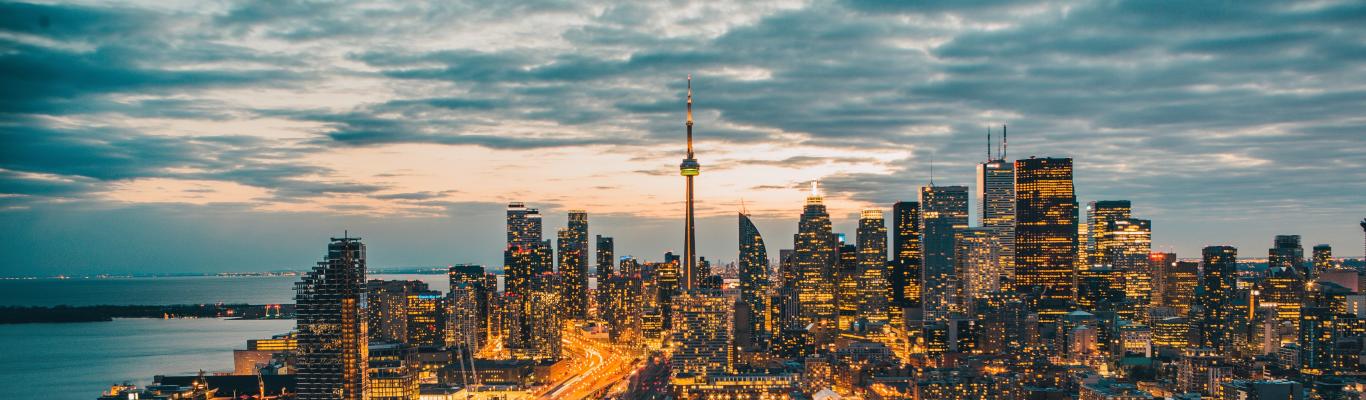

In the 6ix, feast your eyes on murals, paintings and sculptures by First Nations, Inuit and Métis creators.
Downtown street corners, art galleries and parks are living canvases for Indigenous public art in this city. Tkaronto sits on the shores of Lake Ontario, overlooking the same waters that have splashed onto the beaches since time immemorial.
This Mohawk name holds stories, directly translating into: “the place in the water where the trees are standing,” referencing the fishing weirs used by Haudenosaunee and Huron-Wendat peoples.
These lands continue to carry stories that Indigenous artists have recorded for years through various unique mediums. Art has always lived within the very frameworks that Indigenous Peoples govern themselves, as deeply as the territorial agreements between nations represented by textile wampum belts such as the Dish with One Spoon and the Two Row Wampum Belt.
Today, First Nations, Inuit and Métis artists continue to memorialize their personal experiences and the experiences of their communities through public art in Toronto. Here’s what to look for, and where.
Indigenous public art in Toronto
Indigenous murals in Etobicoke
Reclamate the River: Mural Project lives along the Humber River at the edge of the Jane and Finch and Rexdale neighbourhoods. Cree Metis artist, Jason Baerg, mentored a group of local students in 2017 to create a mural using spray paint and stencils to depict natural elements and Indigenous languages.
Inuit sculpture on the waterfront
Kellypalik Qimirpik, an Inuk artist from Cape Dorset, Nunavut, created their 30-feet-high Toronto Inukshuk out of mountain rose granite to commemorate Youth Day in 2002. The sculpture has since been immortalized in Toronto Inukshuk Park on Lakeshore Boulevard just south of Liberty Village, as a symbol of spatial orientation, comfort and advice. It stands tall and welcoming along the waterfront bike path.
First Nations public art by the Distillery District
Equilibrium welcomes residents and visitors to Cherry Street, a stone’s throw from the Distillery Historic District. Created by Ludovic Boney, a Wendat artist from Wendake, Quebec, Equilibrium calls viewers to reflect on their place in the world as they look up from the street to see fire-coloured hanging stems mimicking cattails and reeds.
Indigenous placemaking at Humber Bay Shores
Campfire calls for gathering and reflection at the west-end waterfront’s Humber Bay Shores, providing symbolic warmth to celebrate Indigenous placemaking amidst the sprawling urban city. This 12-foot-tall installation by Michael Belmore, of Anishinaabe descent, and Herman Mejia, from Tegucigalpa, Honduras lights up at night with the warm glow of LED uplights.
Medicine Wheel TORONTO sign at City Hall
The Toronto Sign has found its home in Nathan Phillips Square for years now and received a new addition in September 2020 to commemorate UNESCO’s International Decade of Indigenous Languages. It now features the Medicine Wheel, a visual representation of different teachings and vinyl wrap designed by Toronto-based Anishinaabe artist, Joseph Sagaj.
Native Canadian art in Toronto galleries and museums
Art Gallery of Ontario (AGO)
The AGO is found on Dundas Street West, on the edge of downtown Chinatown.This major gallery cycles through exhibits of different kinds. Its curation highlights the unique mediums and styles of Indigenous artists from coast to coast to coast, sharing artworks from leading artists like Norval Morrisseau and Carl Beam in their permanent collection.
Royal Ontario Museum (ROM)
The ROM also houses a permanent collection of Indigenous art, including textile pieces of beading and soapstone, and visual art pieces from dynamic sketches to intricate paintings.
Native Canadian Centre of Toronto
Located in midtown’s Annex neighbourhood, the Native Canadian Centre of Toronto helps recentre Indigenous experiences in Toronto, delivering free and paid tours that explore the city’s largest collection of Indigenous artwork, and by sharing traditional events and languages unique to Indigenous communities in the area.
Bay of Spirits Gallery
Located in the Esplanade, the Bay of Spirits Gallery hosts Indigenous artworks of various mediums, including iconic Inuit prints and soapstone carvings, northwest coast masks and memorable Woodland School of Art pieces amongst many others.
Feheley Fine Arts
Feheley Fine Arts specializes in Inuit arts and can be found in the St. Lawrence Market area of Old Town. This independent gallery houses artwork depicting the beauty of the Arctic, captured beautifully through the lens of peoples whose existences have been inextricably tied to it since time immemorial.
Tips for respectfully exploring Indigenous art in Toronto
Art is inherent to how Indigenous Peoples move through life, carrying memories beyond these bodies and intergenerational culture in every stitch, carve, and brush stroke. It’s vital to let Indigenous Peoples lead as we move through a time of truth and recognition.
Symbols and cultural protocols will vary depending on the artist's nation and the territory within which the art is being held. One common practice may include asking viewers not to take pictures, depending on the activities happening around or with the art, but such a thing is always up to the discretion of the artist and community.
Indigenous Peoples use art to honour self, the land and the histories that intertwine the two. To respect these aspects is to take time, listen and learn.
Let’s continue to enjoy, honour and support Indigenous creatives and their art with thoughtfulness, intention, and reverence for the natural world around us.
Looking to collect Indigenous artwork while supporting local creators and makers? Here’s how to celebrate Indigenous creative arts in Toronto.


