Tourism is a significant economic driver for Toronto, and the forthcoming Destination Master Plan identifies the waterfront as a key opportunity over the next decade.
Waterfront attractions, cultural institutions, festivals, events, and hospitality businesses all play a vital role in attracting visitors not only to visit, but to stay longer and make return visits. And truly iconic architecture set against our Great Lake backdrop can become globally recognized as an aspirational destination. Reinvesting in established anchors, while bringing new developments and major attractors to complement what already exists, is essential to elevating Toronto's reputation as a vibrant waterfront city.
From the transformation of Ookwemin Minising and the continued expansion of The Bentway, to the future home of Therme Canada and the Ontario Science Centre at Ontario Place, Toronto’s waterfront is undergoing significant change.
International forums like MIPIM provide an opportunity to connect with domestic and global investors seeking investment-ready city-building projects, similar to the types of opportunities identified in the forthcoming Destination Master Plan.
While meaningful transformation is underway, the full opportunity is even greater. In March, Destination Toronto will lead a delegation including representatives from the City of Toronto, Toronto Global, CreateTO, Waterfront Toronto and the Toronto Port Authority, to bring a portfolio of investment-ready waterfront and city-wide projects to MIPIM, the world’s largest urban real estate conference.
At MIPIM, Toronto will join several Canadian cities as part of Destination Canada’s first tourism-focused appearance at the event. Destination Canada will be showcasing the country’s diverse investment opportunities—from urban centers to rural communities—raising awareness of Canada as a prime destination for tourism investment, and highlighting its strategic value proposition to global investors. Over the course of a few days, the Toronto delegation members will engage in 20 pre-arranged B2B meetings, host a curated roundtable with investors and potential partners, and participate in speaking engagements.
Attracting New Investment to Toronto
Taking opportunities to a global audience helps generate new investment and interest to accelerate development. It’s also a key action to attract the most innovative ideas and opportunities to our waterfront for the benefit of residents and visitors. Two of Toronto’s opportunities include:
The Port Lands
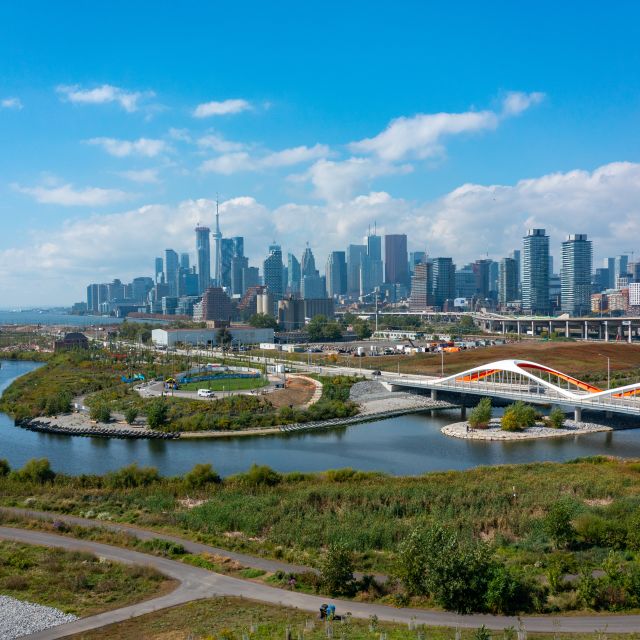
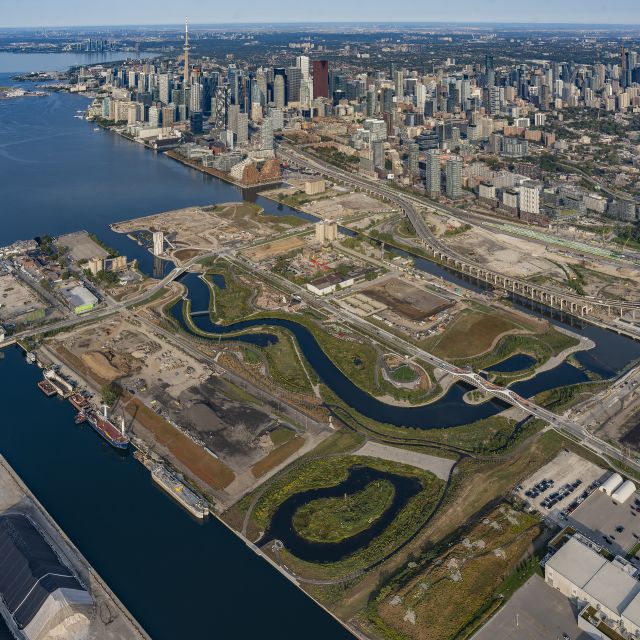
The Port Lands represent one of the largest contiguous areas of underdeveloped urban land in a major global city. A $1.4 billion flood protection and river naturalization program—funded by all three orders of government—has recently unlocked the area for mixed-use development at scale.
At its center is Ookwemin Minising, a newly created island at the mouth of the Don River, anchored by Biidaasige Park and planned to support a future community of more than 15,000 residents.
Ookwemin Minising and South River
At MIPIM, Toronto will be focused on investment opportunities across the Port Lands for new housing, employment space, cultural and entertainment uses, industrial functions, and destination-scale public activation at Ookwemin Minising, and in the South River and South Port districts.
A New Great Lakes Gateway
The Toronto Port Authority is in the early planning stages for the Yonge Street Marine Terminal. This transformative infrastructure project would serve as both a multi-use marine transportation hub and an iconic gateway to the city.
Strategically located on the Central Waterfront and visible from both land and water, the development will include a new marine terminal, public plaza, and pier anchored by a signature architectural landmark. Aligned with the City of Toronto’s marine transit strategy, the facility will be planned to accommodate Great Lakes passenger cruise ships, and marine transit services, as well as certain recreational boating activities positioning Toronto as a premier regional port of call while strengthening connectivity within the city.
The Destination Master Plan
Expected later this spring, the Destination Master Plan will be a 10-year strategic roadmap to guide the growth of the city’s visitor economy. The plan will identify priority projects, infrastructure needs and tourism offerings to strengthen Toronto’s competitive position and enhance the visitor experience.
International forums like MIPIM provide an opportunity to connect with domestic and global investors seeking investment-ready city-building projects, similar to the types of opportunities identified in the forthcoming Destination Master Plan.