









As competition intensifies and the needs of visitors and meeting attendees evolve, Toronto must ensure its convention capacity and destination experiences keep pace with competing cities.
Toronto welcomed over 370,000 delegates in 2025 for meetings and events, generating more than $980 million in economic impact. Sustaining this momentum will depend on the city’s ability to attract international meetings as competition intensifies, supported by tools like the International Convention Attraction Fund (ICAF), designed to help Canadian cities win high-value global events.
One of the opportunities to address the city’s position is through Toronto’s new Destination Master Plan, a comprehensive roadmap designed to strengthen our city’s position as a premier global urban destination over the next decade. Developed with input from 400+ businesses, organizations and community partners, the plan was developed to reflect a broad consensus on the steps we need to enhance to move the city forward.
In the lead-up to Global Meetings Industry Day (GMID) on May 6, Kelly Jackson, Vice-President, Destination Development connected with Tara Gordon, CMP, Senior Vice-President, Global Sales & Service to explore how Toronto’s new Destination Master Plan supports business events, and where there are broader opportunities for the city to drive greater economic value.
Kelly Jackson: GMID provides a moment each year to reflect on the global business events landscape. How are the industry and our competitive set performing?
Tara Gordon: Throughout the past year, global demand for business events remained strong despite an increasingly complex geopolitical and economic environment. The operating environment continues to shift as a result of regional conflicts and impacts on fuel supplies and travel patterns. While rising airline and accommodation costs remain a top concern for event planners, there is clear recognition across sectors of the value and importance of in-person gatherings.
“Peer cities are investing decisively in new venues and meeting infrastructure, experiences and public spaces to gain market share and elevate their international profiles.”
- Tara Gordon, CMP, Senior Vice-President, Global Sales & Service
Overall, the industry has seen sustained recovery post-pandemic. According to the Events Industry Council’s latest Quarterly Global Business Events Barometer, global hotel group room nights have essentially returned to 2019 levels and there’s been an overall shift toward longer-term planning, with RFP activity for events 12 months out continuing to grow. Many of us expect the 2026 Global Economic Significance of Business Events Study to reflect a significantly larger footprint as the sector moves past recovery into growth.
Here in Toronto, we are seeing increasing interest across U.S. and international clients. Last year, Destination Toronto and its partners secured new business that will bring 70 major meetings and events to the city in future years, with an estimated 370,000+ attendees and $973 million in economic impact. Our first months of 2026 continue to bring positive signals for future business.
Peer cities are investing decisively in new venues and meeting infrastructure, experiences and public spaces to gain market share and elevate their international profiles. In the past two years, many U.S. cities have increased assessments to support larger tourism marketing budgets and established new tourism development or tourism marketing districts. Earlier this year, we saw the Chicago City Council approve a resolution to establish a new Tourism Improvement District, projected to raise nearly $40 million annually. This is significant new funding for our Chicago counterparts to deploy to attract more conventions and events. Meanwhile, at least 19 U.S. cities are planning on, or already building new convention centres. In Texas alone, more than $7 billion is being invested into three such projects. Our competitors recognize that resting on legacy assets and attractions is no longer enough.
KJ: How does ICAF strengthen Canada’s ability to compete for major international events, and why is this a particularly important moment for Canada given the current geopolitical landscape?
TG: Given the fierce competition within the "MICE" (Meetings, Incentives, Conventions, and Exhibitions) industry, the International Convention Attraction Fund has become a critical tool for Canadian destinations. Our U.S. peer cities often provide significant subsidies to attract major events, and ICAF helps level the playing field by providing grants to support bids for events within key economic sectors. Here, in Toronto, the program helped us secure 19 meetings over two years with an estimated impact of $207M.
The program’s impressive 20:1 return on investment, and the way it supports a “Team Canada” coordinated approach between local DMOs and Destination Canada, has been a real success story. The recent federal announcement of an additional $15M over three years for the fund demonstrates strong confidence in the impact of our country’s business events sector, and will help drive further private sector investment and support jobs nation-wide.
“By coming together across tourism, hospitality, public and private sectors to create this ten-year vision and shared framework for action, we aren't just expanding our infrastructure; we are amplifying what makes us exceptional; our diversity, our innovation, and our ability to bring the world together.”
- Tara Gordon, CMP, Senior Vice-President, Global Sales & Service
This is a moment for Canada to build off our strong global reputation as a welcoming, stable and forward-looking country. ICAF is just one way we can translate our tourism advantage into more year-round economic growth by bringing more global conferences and conventions to Canadian cities. At a time characterized by a focus on the intersection of technology, sovereignty and trade, hosting major meetings and conventions helps bring more investors and industry leaders to Canada, and ensures our country’s experts are at the centre of international knowledge exchange and dialogue.
KJ: From your perspective, how does our recently released Destination Master Plan position Toronto to win more high-value business events in an increasingly competitive landscape?
TG: On Global Meetings Industry Day, we celebrate the profound impact that business events have as catalysts for innovation and economic growth. As Canada’s economic powerhouse, Toronto is already a top-tier destination for meetings. However, the global landscape is changing; our peer cities are investing billions into infrastructure to capture market share.
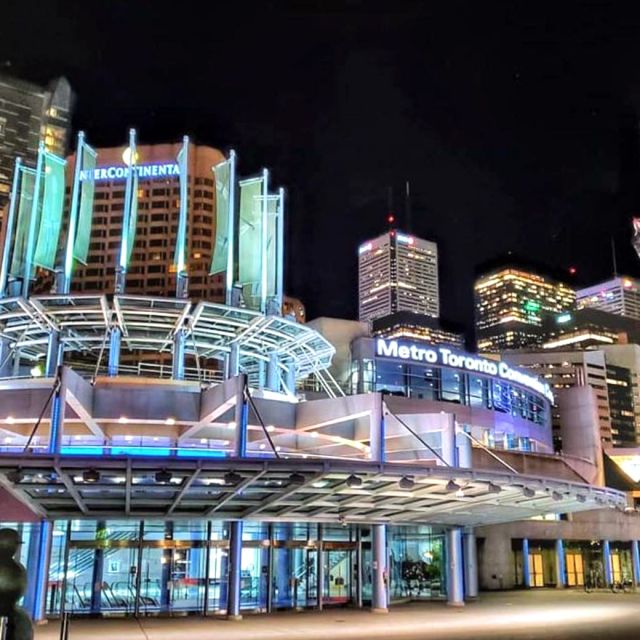
The new Destination Master Plan for Toronto provides our roadmap to stay ahead. It positions us to win high-value business events by directly addressing our most critical gaps: venue capacity and convention-adjacent lodging. Track 3 of the plan supports the vision for a next-generation convention centre and a vibrant district featuring headquarter hotels, restaurants and more.
A Destination Master Plan is more than a strategy; it is a declaration of intent that aligns public and private partners around a singular vision. We see the power of this approach in Los Angeles, where strategic coordination through their master plan supported a $2.6 billion convention centre expansion and modernization project that began in late 2025. By functioning as a unified events ecosystem, LA has set a benchmark for how long-term planning provides the necessary framework to secure massive infrastructure investments.
Crucially, the plan aligns business events with Toronto’s sectoral leadership in technology, life sciences, and finance. This ensures meetings are not isolated events but citywide celebrations that drive investment and long-term prosperity. To support visitors and meeting delegates, Track 2 prioritizes seamless connectivity. From multi-billion-dollar airport expansions to the new Waterfront East Transit Line, as a destination, we are ensuring that the journey from the terminal to the opening plenary session is efficient and welcoming.
“This is a moment for Canada to build off our strong global reputation as a welcoming, stable and forward-looking country.”
- Tara Gordon, CMP, Senior Vice-President, Global Sales & Service
By coming together across tourism, hospitality, public and private sectors to create this ten-year vision and shared framework for action, we aren't just expanding our infrastructure; we are amplifying what makes us exceptional; our diversity, our innovation, and our ability to bring the world together. This is how Toronto stakes its rightful place as a premier global host for the decade to come.